
Exploring the Impact of Division Worksheets in Early Math
Intro
In the ever-evolving landscape of education, it's essential to lay a solid foundation in mathematics, and division is one critical aspect of that journey. While many may view division as a complex skill reserved for older students, early exposure to these concepts can significantly enhance a child's cognitive abilities and mathematical fluency. Beginning division worksheets serve not only as educational tools but as stepping stones in a child's mathematical development.
Choosing the right materials and methods for teaching division can be challenging, especially for parents and educators eager to foster a love for learning. In this article, we will explore how beginning division worksheets can be effectively integrated into early mathematics education for children aged three to twelve. This exploration will cover not just the worksheets themselves, but also the best practices, engaging strategies, and the overall significance of making division relatable and understandable for young learners.
Delving into various interactive learning methods, such as games and hands-on activities, will highlight how these approaches can complement the use of worksheets and facilitate a deeper understanding. Ultimately, our goal is to arm educators and parents with the knowledge and resources they need to nurture a child's mathematical abilities from a young age, paving the way for a successful academic journey ahead.
Prelims to Division Concepts
In the realm of mathematics, division represents not just a computational skill, but a fundamental concept that lays the groundwork for more complex mathematical learning. For young learners, grasping the essence of division is crucial. It connects ideas of sharing and grouping, allowing children to understand how numbers interact in practical ways. By introducing division through worksheets designed for beginners, teachers and parents create a structured environment that fosters understanding.
When children engage with division worksheets, they are not merely filling in boxes with numbers. They are exploring the principles of partitioning—dividing a whole into parts—and comprehension of this concept can drastically improve numeracy skills. Early exposure to division worksheets enhances not only mathematical capabilities but also critical thinking and problem-solving competencies that extend beyond the classroom.
Understanding Division in Early Education
Division is often perceived as a tricky subject in mathematics, especially for young minds. However, tackling it early in education can demystify this concept. In many ways, division is akin to a puzzle where children learn to find solutions by breaking down larger problems into manageable pieces. By engaging with division worksheets, children can practice identifying how many times one number fits into another, fostering a natural intuitive understanding of the concept.
Worksheets serve a dual purpose—providing practice and offering a visual representation of division concepts. For instance, a simple equation like 8 ÷ 2 can be exemplified through illustrations of eight apples being shared between two friends. This kind of visual aid can spark curiosity and engagement, transforming division not into a mere calculation, but a real-world situation.
Staging Division: When Should Children Begin?
The question of when to introduce division often puzzles educators and parents alike. Generally, experts suggest that children as young as five or six can start interacting with simple division concepts. This timing corresponds with their cognitive development stages, allowing them to grasp the basic ideas behind division through playful and engaging methods.
Beginning with small numbers and relatable scenarios can ease children into the world of division. For instance, using toys or food items to demonstrate sharing can make the learning process enjoyable. As they gain confidence and improve their skills, concepts can gradually become more complex, introducing them to division in scenarios involving larger numbers and more abstract thinking.
A gradual introduction to division early on can significantly boost a child’s confidence in their mathematical abilities.
This process of staging division education, using worksheets that grow in difficulty and complexity, enables children to build a sturdy foundation. Incorporating division concepts into their everyday activities further enriches their learning experience, providing a practical context in which they can see the relevance of what they are learning.
In summary, beginning division worksheets play a pivotal role in early mathematics education. They are not just educational tools but gateways for children to build solid mathematical foundations. Through thoughtful implementation and gradual progression, educators and parents can cultivate a deep understanding and appreciation for division in young learners.
The Educational Value of Worksheets
Worksheets play an essential role in early mathematics education, especially when it comes to foundational concepts like division. The value they provide goes beyond simply offering exercises for practice; they facilitate a structured approach to learning that can significantly enhance a child's understanding. Worksheets serve as a bridge connecting abstract mathematical ideas with tangible outcomes. Whether under the guiding hands of parents or in the attentive environment of a classroom, worksheets can make the complex world of numbers more accessible.
Why Use Worksheets for Division?
Incorporating division worksheets in early education can significantly impact a child's ability to grasp division concepts. Here are a few reasons why these tools are vital:
- Skill Reinforcement: Worksheets provide repeated practice that reinforces essential division skills. When children work through various problems, it helps cement their understanding and enables them to recall division strategies more effectively.
- Structured Learning: These worksheets guide learners through a planned sequence of exercises, gradually increasing their challenge level. It’s similar to playing a game where early levels prepare you for more complex tasks ahead.
- Error Analysis: Worksheets allow both educators and students to identify mistakes and misunderstandings. This analysis is critical in reshaping a student's thought process, helping them to recognize where they might be going wrong.
- Motivation: Completing a worksheet can offer a sense of accomplishment. Especially for younger students, seeing a finished product can spark motivation and pave the way for a more enthusiastic approach to learning.
"Worksheets not only offer practice but also encourage a systematic approach to problem-solving, essential for young learners."
Worksheets and Different Learning Styles
Recognizing that children learn in diverse ways is paramount in education. Worksheets can be tailored to address various learning styles, ensuring that each child can engage meaningfully with division concepts:
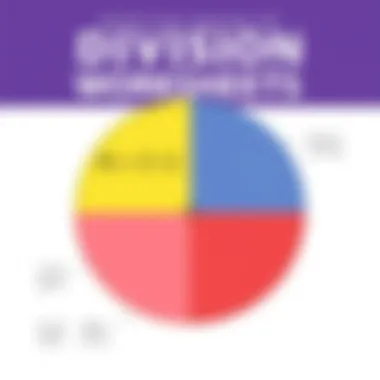
- Visual Learners: These students benefit from worksheets that incorporate graphs, charts, and pictorial representations of division. For instance, showing division through pie charts can effectively illustrate how numbers are split into groups.
- Auditory Learners: Worksheets can be coupled with oral instructions or discussions about division. Teachers can use worksheets as a launching pad for classroom dialogue, ensuring that auditory learners grasp the underpinning concepts through conversation.
- Kinesthetic Learners: These students thrive on movement and physical interaction. Worksheets can be designed to include hands-on activities, such as using physical objects for dividing groups. Imagine a worksheet that prompts them to use blocks to visualize the problems they’re working on.
- Read/Write Learners: Traditional worksheets cater to these learners by incorporating written problems that require clear, logical thinking. They flourish in environments where they can interpret text and respond accordingly, extracting information from written language.
In summary, worksheets are not a one-size-fits-all tool but a versatile educational resource that caters to varied learning preferences. They can unlock the door to division mastery for children, fostering confidence and competence in their mathematical journey.
Designing Effective Division Worksheets
Creating effective division worksheets is a critical aspect of fostering early mathematical understanding in children. An effective worksheet should do more than just present problems; it should engage young learners, guiding them through the intricacies of division while ensuring comprehension. The design of these worksheets impacts not only students' ability to perform division but also their overall attitude towards mathematics, which is pivotal in their formative years.

Key Elements of Division Worksheets
When designing division worksheets, certain elements stand out as essential. Firstly, clarity is key. The language used should be age-appropriate and straightforward, avoiding convoluted phrases that could confuse children. Secondly, variety is crucial. Worksheets should include a mix of problem types to cater to different learning styles. For instance:
- Simple division problems with numbers
- Word problems that require critical thinking
- Visual division problems using diagrams or pictures
Thirdly, the layout of the worksheets should be appealing. Children are more likely to engage with materials that are visually inviting and not overcrowded. Adequate spacing helps in preventing errors, allowing young mathematicians to focus on problem-solving without the distraction of clutter.
Lastly, autonomy is important; providing exercises that allow for independent thinking as well as collaboration fosters a sense of ownership over the learning process. This encourages children to seek help when needed, reinforcing cooperative learning.
Incorporating Visual Aids and Examples
Incorporating visual aids within division worksheets plays a monumental role in aiding comprehension. Visual elements like pictures, charts, or drawings can provide context that simple text cannot convey. For instance, using pizza slices or fruit baskets can help children visualize division as sharing a set of items among a group. When children see that dividing four apples among two friends means each gets two, it concretizes the concept in a meaningful way.
Here are some effective visual aids to consider:
- Illustrative Diagrams: Showcasing division as a group activity.
- Step-by-Step Visual Guides: Breaking down each division step with accompanying visuals helps reinforce concepts.
- Color-Coded Sections: Highlighting different parts of a problem dynamically aids retention.
Visual examples paired with written instructions lead to better engagement as students can relate textual information back to real-world scenarios. Additionally, they cater to visual learners who benefit from seeing concepts laid out plainly.
Aligning Worksheets with Curriculum Standards
A significant factor in the success of division worksheets lies in their alignment with existing curriculum standards. Creating worksheets that resonate with what educators are already teaching ensures continuity in learning. It allows children to practice division skills in various contexts that are deemed essential by educational authorities. This ensures that the knowledge they gain is not only relevant but also reinforces classroom instruction.
To achieve this alignment, educators should:
- Reference State Standards: Utilize the guidelines set forth by state education departments. For example, the National Council of Teachers of Mathematics (NCTM) offers comprehensive guidance.
- Collaborate with Teachers: Engaging in dialogue with educators to understand their classroom dynamics and what skills they are focusing on.
- Adapt and Modify: Consider the different pacing and skill levels in classrooms; worksheets should be flexible enough to meet various student needs while still adhering to the main objectives of the curriculum.
Strategies for Teaching Division
When it comes to shaping young learners' understanding of division, strategies play a crucial role. Teaching division is not merely about solving problems; it’s about developing a mindset that embraces mathematical thinking. The well-structured application of strategies can make a significant difference in how children perceive and engage with division concepts. This section will delve into effective teaching practices, emphasizing not only how division operates but also why it matters in the broader spectrum of mathematics.
Engagement through Practical Applications
One of the most effective ways to teach division is through practical applications. Children often find abstract concepts challenging to grasp without real-world context. By linking division with tangible activities, educators can kindle interest and help children see the relevance of math in everyday life. For instance, involving youngsters in dividing snacks during a group activity can engage them directly in the concept of sharing. Imagine a classroom where each student has six cookies and must find out how to share them equally with two friends. Suddenly, division becomes a fun challenge rather than a daunting task.
Moreover, practical applications can take various forms, including:
- Group Activities: Engage kids in projects where they physically divide items into groups. For example, counting and distributing blocks, toys, or even books can illustrate division.
- Real-Life Scenarios: Host mock store setups where children can use play money to buy items and calculate the divisions of costs. This allows them to practice division in a context most are familiar with.
- Field Trips: Field trips to places like farms can provide opportunities to learn about division in context, such as dividing the harvest among various stalls.
Practical applications not only enhance understanding but also create memorable experiences that solidify knowledge in ways worksheets alone cannot achieve.
Using Games to Reinforce Division Skills
Incorporating games into learning can transform division lessons into lively and engaging sessions. Using playful approaches helps reduce students' anxiety and creates a positive learning atmosphere. Games can range from simple board games designed around division problems to online apps that reinforce skills through interactive stories or challenges.
A few engaging game ideas include:
- Division Bingo: Create bingo cards with division answers and call out the problems. This keeps kids on their toes as they work to recognize patterns and make connections.
- Online Challenges: Websites like Khan Academy offer interactive division games that make learning an adventure, providing immediate feedback on their performance.
- Card Games: A simple deck of cards could be transformed into a division game where students must divide the total number of cards equally.
By using games, educators also foster teamwork and communication. When children play together, they discuss strategies, share insights, and collaborate to find solutions. Each game becomes an opportunity for children to learn from one another while reinforcing their division skills in an enjoyable way.
Engaging methods, such as practical applications and games, are not just fun; they are integral in building a solid foundational understanding of division in early math education.
Addressing Common Challenges
The journey through mathematics can be full of bumps, especially when it comes to division. It’s crucial to address common challenges that young learners encounter during this stage. Effective worksheets are not just a series of problems; they are a tool to ease anxiety and dispel misconceptions. By focusing on the struggles students face, educators and parents can tailor their approach to ensure children gain confidence and clarity in their understanding of division.
Anxiety Associated with Division
It's not uncommon for children to feel anxious about division. From early school days, some forms of math have been painted as daunting creatures lurking in the shadows. This anxiety can stem from several sources. First, division is introduced alongside multiplication, where the idea of sharing and dividing quantities seems more complex when kids are still grasping basic arithmetic. The fear of failure can cause a chain reaction, where a child begins to dread math class because they associate it with stress.
To tackle this concern, worksheets should first create a low-pressure environment. Simple, relatable scenarios can help ease children into the concept. For instance, using objects they find familiar, like apples or toys, can facilitate an understanding of division as simply sharing among friends. These worksheets can be stepwise in nature, transitioning from concrete examples to abstract notions without overwhelming them. This gradual approach not only builds competence but also reduces anxiety, making children feel like they can conquer the challenge ahead.
Additionally, feedback from teachers and parents holds immense weight. Phrases like "You’re getting closer!" or “Let’s try again together!” can work wonders in reducing fear and instilling a growth mindset. With the right encouragement, division can transform from fearsome to friendly.
Misconceptions About Division
Misconceptions about division often run rampant among young learners. Many children don’t fully understand what division represents. They may confuse it with subtraction or believe that results always need to be whole numbers. Such misunderstandings can distort their mathematical framework, leading to deeper confusions in later concepts.
Consider a child presented with the problem of 12 divided by 4. They might expect the answer to always be a complete number or relate it back to a story they know. Such preconceived notions shape their responses and hinder true comprehension.
To dispel these myths, worksheets should integrate a mix of verbal explanations, illustrations, and relatable analogies. Presenting division as a way of organizing items, like grouping chocolate bars or toys into equal parts, can clarify its purpose. Making connections to real-life scenarios fosters comprehension, leading children to view division not as merely arithmetic but as a tool for problem-solving.
Understanding misconceptions is crucial for both parents and educators. Simplifying complex terminology and avoiding jargon can open up dialogues and encourage questions. Encouraging curiosity can be immensely powerful.
"Learning math, like division, is a building process. Clear misconceptions brick by brick, and a strong foundation forms."
In wrapping up, addressing anxiety and misconceptions in division learning is vital. Worksheets designed thoughtfully can turn a challenging concept into an approachable and pleasant learning experience. Parents and teachers alike play a critical role here, guiding young learners through their initial struggles, ensuring they develop a solid grasp on division principles.
Assessment and Feedback
In early mathematics education, the role of assessment and feedback cannot be understated, especially when it comes to division learning. It’s like holding a mirror up to a child’s understanding of a concept, reflecting not just their progress but also shedding light on areas that need attention. Through this dual lens, educators can tailor their approaches, ensuring that each child is set up for success.
Evaluating Student Progress
Assessing student progress in learning division involves more than just ticking boxes on a worksheet. Educators need to deploy a variety of assessment methods to get to the heart of each child’s understanding. For instance:
- Observational Assessments: Teachers can observe students while they tackle division problems. Are they confident or struggling? Do they ask questions, or do they sit in silence? This real-time feedback can provide clarity on their grasp of core concepts.
- Skill-based Assessments: Worksheets can be designed to evaluate specific skills in division, like understanding remainders or the relationship between division and multiplication. Here, the focus shifts to measuring mastery over these skills instead of merely completing problems.
- Peer Assessments: Encouraging students to review each other's work can promote collaborative learning. Sometimes a peer can explain a concept in a way that resonates better than the teacher’s explanation.
Evaluating progress should be an ongoing process, not a one-time event. This continuous cycle of evaluation allows teachers to adapt their instruction based on the needs of their students effectively. It ensures no child falls through the cracks and helps identify those who may require interventions or additional support.
Providing Constructive Feedback
Once evaluation is completed, the next step is arguably just as critical: providing constructive feedback. It’s like giving a roadmap to students, showing them where they’ve been and where they can go next.
When offering feedback on division worksheets, it’s important to:
- Be Specific: Instead of saying, "Good job," point out what they did well, such as "I see you clearly divided the numbers, and your use of the visual aid made it easier to understand the division process."
- Focus on Growth: Highlight improvements rather than just correct answers. For example, if a student initially struggled but improved over time, acknowledge that journey. It fosters a growth mindset, making students more receptive to learning.
- Encourage Self-Reflection: Ask students how they feel about their performance. Questions like, "Which part did you find most challenging?" help them engage in reflective learning, enhancing their understanding of their own processes.
- Include Next Steps: Feedback should not just highlight current achievements but also guide future learning. Suggest specific areas to focus on or strategies to try in their next practice, making it clear that improvement is a continual journey.
Effective feedback is essential for motivating students and reinforcing their interest in division. When students know where they stand and how they can improve, they are more likely to keep pushing forward.
Integrating Technology in Division Learning
In the rapidly evolving educational landscape, integrating technology into division learning has become increasingly important for several reasons. Using innovative tools and resources can transform traditional methods, making division concepts more accessible and engaging for young learners. The potential benefits are vast, ranging from personalized learning experiences to improved engagement. With the right online resources and apps, we can foster a more interactive environment where children can practice division effectively.
Online Resources for Division Practice
Online resources serve as an indispensable addition to worksheets in teaching division. These platforms enable children to practice at their own pace, providing instant feedback and personalized learning paths. One strong advantage is that they often include games and interactive exercises, motivating students to engage without the pressure of traditional assessments. Examples of effective online resources include Khan Academy and ABCmouse, which offer a range of division activities designed specifically for young learners.
Some key features of these online resources are:
- Interactive math games that reinforce division concepts
- Videos explaining division in relatable contexts
- Worksheets available for print and additional practice


Furthermore, online platforms frequently update their content, ensuring that children are always exposed to the most relevant practices in mathematics education.
"With the increasing availability of online educational resources, the opportunity to enhance division learning is more accessible than ever."
Using Apps to Support Division Skills
The rise of educational apps cannot be overlooked when discussing division learning. Apps designed for math practice can enhance comprehension and retention by allowing for innovative learning strategies. For example, an app may employ gamified experiences where incorrect answers don't just get marked as wrong; they often lead to different explanations or similar problems to tackle, helping children grasp the underlying concepts more effectively.
Besides engaging content, many apps tailor the complexity of problems based on user performance, allowing learners to build confidence over time. Noteworthy apps for division skills include Mathway and SplashLearn, each providing unique features to support children’s learning experiences.
Some advantages of using apps in division learning include:
- Immediate feedback and hints visually presented
- Opportunities for layered learning, from simple to complex problems
- Accessible on various devices, promoting learning anytime and anywhere
As we navigate the world of early mathematics education, integrating technology stands as a crucial aspect of teaching division. By leveraging these resources and tools, we can create a learning landscape that reshapes how children experience mathematics, ensuring that they build strong foundational skills.
Parental Involvement in Learning Division
In the journey of learning mathematics, parental involvement plays a crucial role. Parents are often the first teachers a child encounters. They set the foundation for a child’s attitude towards learning, particularly in areas like division, which can sometimes seem daunting. When parents actively engage in their children's math education, it can lead to significant improvements in understanding and performance.
The supportive atmosphere created by parental engagement nurtures confidence in young learners. Children often mirror their parents' attitudes towards a subject. If parents display enthusiasm for division, children are more likely to adopt a similar mindset. Here are some specific elements and benefits of parental involvement in learning division:
- Encouragement of Practice: When parents encourage practice, whether through worksheets or everyday scenarios, children gain familiarity with division concepts.
- Real-world Applications: Parents can show how division is part of everyday life—like sharing snacks or dividing chores. This practical application makes learning relevant and fun.
- Emotional Support: Learning division can be stressful for some children. Parents can provide emotional grounding, helping kids navigate their anxieties about the subject.
In sum, a collaborative approach fosters a solid groundwork for potential success in mathematical endeavors. This leads us to explore how parents can specifically support division learning at home.
How Parents Can Support Division Learning at Home
There are several ways parents can effectively support their children in mastering division at home:
- Utilizing Worksheets: Parents should incorporate beginning division worksheets into their children's routine. These worksheets act as structured practice. It is vital to choose worksheets that are not overly complicated, so a child can build confidence gradually.
- Interactive Learning: Instead of just traditional worksheets, parents can create games that involve division. For instance, use everyday items, like toys or snacks, to simulate division problems. “If you have six cookies and three friends, how many does each one get?” Bringing math into tangible scenarios brings clarity and fun.
- Discussion of Challenges: Parents should encourage children to talk about what they find challenging. Open conversations can illuminate misconceptions and help to clarify any doubts. Understanding the student’s perspective allows for tailored support.
- Celebrating Progress: Recognizing and celebrating small victories in learning division can motivate children. This reinforcement empowers kids to tackle more significant challenges ahead.
Through these strategies, parents can foster an environment where division becomes less of a hurdle and more of an intriguing puzzle to solve.
Creating a Collaborative Learning Environment
A collaborative learning environment is essential for nurturing long-term mathematical understanding and fostering growth.
- Involvement of Family: Encourage the entire family to be part of the learning process. Family game nights centered around math problems or puzzles can spark interest and create a collective atmosphere of learning.
- Setting Up a Learning Space: Designate a quiet, resource-rich area in the home where children can focus on their math work. Having a space that is both comfortable and safe for exploration is key to stimulating a love for learning.
- Regular Check-ins: Parents can schedule regular times to check-in on their child’s progress. Simple discussions about what they did in math class or tasks enjoyed can strengthen relationships and encourage commitment towards achieving learning goals.
Ultimately, fostering a collaborative environment involves both parents and children engaging. It’s about sharing the task of learning division together, making it a richer experience on both sides. Engaging in this way can lay a stronger foundation for lifelong learning in mathematics, preparing children to navigate complex concepts as they progress academically.
"Parental involvement and encouragement is not just an asset, it becomes a vital ingredient in ensuring that a child flourishes in their learning journey."
By embedding division learning into everyday life, the task of mastering this mathematical foundation becomes not only achievable but also exciting for young learners.
Epilogue: The Future of Division Education
The future of division education is a pressing matter that extends beyond mere arithmetic skills. It encompasses the foundation of children’s mathematical journey and shapes how they approach problem-solving throughout their lives. In our exploration of beginning division worksheets, it's clear that these resources are not just academic tools, but bridges to deeper understanding and confidence in mathematics.
Emphasizing Lifelong Learning in Mathematics
In today’s fast-paced world, where information and technology are constantly evolving, fostering a mindset of lifelong learning in mathematics is crucial. Beginning division worksheets play a pivotal role in nurturing this mindset from an early stage. By presenting division concepts in an accessible manner, these worksheets encourage children to engage with math regularly, not just in a classroom setting.
- Building a Strong Foundation: Children exposed to division early on are more likely to develop a love for mathematics. Understanding division—how to partition and share—creates a solid basis for more complex mathematical concepts like fractions and ratios later on.
- Encouraging Exploration: Worksheets that challenge students to think critically foster curiosity. Children learn that there is often more than one route to a solution. This discovery can ignite a passion for exploration and a desire to learn beyond the basics.
- Promoting Resilience: Division can be tricky, and having a strong foundation helps students build resilience. They learn that struggling with a problem is a natural part of learning. Worksheets provide a safe space to practice, where mistakes turn into learning opportunities.
The Role of Continuous Improvement in Educational Tools
As we move forward, the evolution of educational tools must not be overlooked. Continuous improvement in how division worksheets are designed and implemented is vital for maintaining their effectiveness in teaching young learners.
- Adapting to New Research: The educational landscape is dynamic. New research illuminates different pathways to learning. Effective resources continually integrate these findings, ensuring that worksheets remain relevant and beneficial.
- Feedback Loops: Constructive feedback from students, educators, and even parents can refine worksheet content. By listening to the needs of all stakeholders, the development of these tools can hit closer to home, promoting engagement and practical understanding.
- Technology Integration: The rise of digital tools presents an exciting opportunity for enhancing division worksheets. Interactive platforms that gamify learning can hold the attention of young learners far better than traditional sheets. Utilizing this technology in tandem with physical worksheets can foster an engaging hybrid learning environment.
In summary, the future of division education lies in embracing both traditional practices and innovative approaches. By continually enhancing educational tools, we empower children to not only master division but to also embrace the joy of mathematics as a lifelong learning adventure.