
The Sculpture of Pablo Picasso: An Analytical Exploration


Intro
Pablo Picasso, a name synonymous with modern art, has left an indelible mark on the landscape of sculpture. His journey from a young painter to a groundbreaking sculptor is nothing short of extraordinary. Throughout his life, Picasso explored various materials, styles, and forms. This exploration is not merely an artistic venture; it serves as a lens through which we can understand the cultural and ideological shifts of the 20th century.
His sculptures invite us to ponder more than just their aesthetic appeal; they challenge our perceptions and engage us in dialogues about the nature of existence, identity, and transformation. As we embark on this analytical exploration, we'll delve into the multifaceted world of Picasso's sculptures, tracing their evolution from early work to more abstract expressions, while reflecting on the influences that shaped his unconventional vision.
Through this journey, we're not merely uncovering artistic techniques but responding to the profound questions Picasso posed through his three-dimensional creations. This discourse aims to facilitate a richer understanding of his contributions to modern art, while provoking critical reflections on his lasting legacy. So, let's turn the page and explore the dynamic world of Picasso’s sculptural artistry.
Preamble to Picasso's Sculptural Art
The realm of Pablo Picasso's sculptural art is rich and varied, serving as a crucial element in understanding the entirety of his artistic endeavors. Throughout his life, Picasso constantly pushed the boundaries of creativity, transforming not only painting but also the three-dimensional space around him. Delving into this aspect allows us to appreciate not just the artworks themselves, but also how they interact with broader artistic movements and individual ideologies.
Picasso's journey in sculpture is marked by experimentation, constantly evolving through the years. This section will explore key elements of his sculptural work, emphasizing its importance and relevance in the modern artistic landscape. Understanding these contributions helps in recognizing how they laid the groundwork for future artists, essentially providing fertile soil for contemporary sculpture.
An Overview of Picasso's Artistic Journey
Pablo Picasso was born in Malaga, Spain, in 1881 and displayed a talent for art from a young age. His early education, influenced by his father, an art teacher, allowed him to develop a firm foundation in traditional techniques, but it was the discovery of various art forms that spurred his innovations. Moving to Paris in his twenties, he became embroiled in the lively artistic scene, interacting with various artists and thinkers, which expanded his views.
Over the years, Picasso's styles changed dramatically. His Blue Period highlighted deep emotional resonance through monochromatic tones, and later, the Pink Period introduced warmer colors and lighter themes. Eventually, he co-founded the Cubist movement, which significantly influenced his approach to form and space, resonating profoundly in his sculptural works. In developing realistic representation alongside abstraction, he showcased how diverse influences shaped his vision, leaving an indelible mark on art history.
The Role of Sculpture in Picasso's Oeuvre
Sculpture held a distinct place in Picasso's creative arsenal, acting as a bridge between two-dimensional canvases and the expansive dimensions of reality. Rather than viewing sculpture merely as a supplementary art form, Picasso infused it with his signature approach, utilizing disparate materials and forms. His willingness to explore and challenge conventional notions in sculpture allowed him to stand apart from his contemporaries.
Sculpturally, Picasso embraced methods like assemblage, where he would combine found objects into coherent forms, thereby defying traditional expectations of material origins. This practice was not merely about the physical assembly but also about conceptual depth, hinting at narratives and emotions woven into the materials themselves. Picasso's sculptures often invite viewers to question their surroundings and perspectives—taking the everyday and transforming it into profound statements.
"Art is a lie that makes us realize truth." – Pablo Picasso
Through his innovative techniques and styles in sculpture, Picasso influenced future generations, challenging norms and expectations in the most compelling ways. His contributions persist as integral facets of modern art and remain relevant in ongoing discussions surrounding artistic expression.
Artistic Influences and Background
Understanding the backdrop of Picasso's artistic journey is essential to grasp the world of his sculptures. This section delves into the rich tapestry of influences and experiences that shaped his pioneering approach to sculptural forms. Picasso’s life was a confluence of varied cultural currents that fueled his iconic vision, making it crucial to explore this foundation, for it illuminates how he disrupted and reinvented artistic norms.
Early Life and Education
Pablo Picasso was born in Málaga, Spain, in 1881. His early exposure to art can be traced back to his father, who was an artist himself. By the age of seven, Picasso had already begun sketching, and by thirteen, he'd already completed an academic painting titled Le Picador. Despite this formal training, which often emphasized realism, Picasso’s spirit was rebellious. His art was like fresh fruit – ripe with the possibilities of the imagination, waiting to be explored beyond traditional borders.
Picasso’s formal education continued at the School of Fine Arts in Barcelona where he encountered a milieu filled with contrasting styles. He rejected conventional methods, gravitating instead towards modern artistic movements. This phase marked the genesis of his distinct style, baffling many with his audacity to diverge from realism and venture into abstract realms.
Influence of African Art
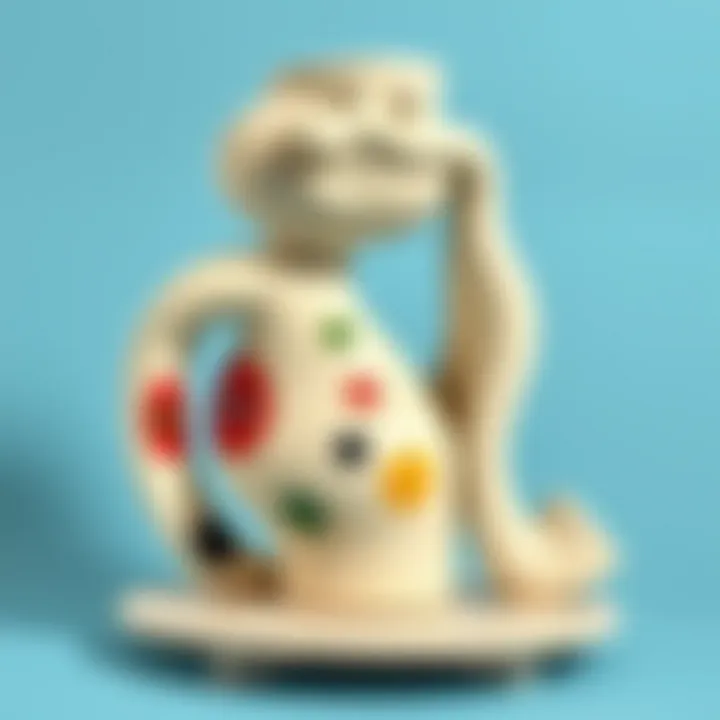
The influence of African art on Picasso's sculptural work cannot be overstated. In the early 1900s, he came into contact with African artifacts in various museums, and these inspirations seeped into his artistic practice, altering its course significantly. The stark, expressive forms of African masks and sculptures struck a chord with Picasso, feeding his hunger for innovation.
Key Sculptural Works
The sculptural creations of Pablo Picasso stand as pivotal milestones in the landscape of modern art. These works not only showcase his innovative approach to form and materials but also reflect significant shifts in artistic expression throughout the 20th century. Understanding his key sculptures is essential for grasping how they encapsulate both personal narratives and broader socio-political themes. From fragmentary forms to compelling assemblies, each piece offers a glimpse into Picasso's mind, revealing how deeply intertwined his sculptures are with his diverse artistic practices and philosophical underpinnings.
The Head of a Woman ()
The Head of a Woman, sculpted in 1909, signifies a major turning point in Picasso's exploration of form. This work reflects the advent of Cubism, a movement he co-founded. The sculpture embodies stark geometric shapes that distort the conventional representation of the human figure. It’s intriguing to note how Picasso employed a style that stripped away unnecessary details, honing in on the essence of the subject.
This piece is remarkable for its raw expression, transforming the mundane into the extraordinary. The fragmented surfaces engage the viewer in a dialogue about identity, breaking it down into components that challenge traditional aesthetics.
A significant aspect of this sculpture lies in its material choice, with Picasso working predominantly with plaster. Unlike stone or marble, plaster allowed for greater experimentation, offering the artist a fluid medium to effectively capture his ideas. The piece can be seen as a precursor to his later works, laying a foundation for his ambitious explorations of identity and perception.
Guitar ()
The sculpture Guitar from 1912 is another watershed moment in Picasso's career. Made from cardboard and tin, this work is playful yet profound; it mirrors his unyielding creativity and ingenuity. Through Guitar, Picasso introduces the concept of collage into sculpture, which was a radical departure from traditional techniques.
What’s notable about Guitar is its ability to defy the viewer's expectations. The play of light and shadow on its angular planes evokes a sense of movement, almost as if the piece is alive. By dissecting and reassembling familiar forms, Picasso compels us to reconsider our understanding of reality — an idea deeply rooted in Cubist philosophy.
This work not only marks the beginning of a new artistic direction but also signifies Picasso’s commitment to material exploration. By utilizing everyday materials, he democratizes art, inviting broader audiences to engage with its themes and messages.
The Weeping Woman ()
The Weeping Woman, created in 1937, stands as a poignant testament to Picasso’s ability to channel raw emotional energy into his art. This sculpture, which can be viewed as a companion piece to his famous painting of the same name, confronts themes of suffering, loss, and grief in the context of the Spanish Civil War.
In this work, Picasso employs fragmented shapes and colors that reflect turmoil and despair. The eyes of the woman are wide and hollow, capturing a haunting sorrow that resonates deeply with viewers. Each angle offers a new perspective, illustrating her pain but also hinting at resilience.
Importantly, Picasso utilizes ceramics in this piece, further demonstrating his willingness to explore diverse materials to evoke powerful emotional responses. This choice allowed him to play with textures and layers, enhancing the emotional weight of the sculpture.
As a whole, The Weeping Woman is not merely a representation of grief; it serves as a political commentary on the broader implications of violence and suffering in society. Picasso’s legacy, encapsulated in these key works, resonates far beyond their visual impact, inviting ongoing reflection and interpretation.
"Art is a lie that helps us realize the truth." - Pablo Picasso
In sum, the key sculptural works of Pablo Picasso invite us to journey through his artistic evolution, revealing not only the technical brilliance behind each piece but also the profound narratives they encapsulate. They remind us of the power of sculpture to transcend mere representation and engage us in deeper societal and personal dialogues.
Techniques and Materials
The exploration of techniques and materials in Pablo Picasso's sculptural works plays a pivotal role in understanding his artistic journey. Picasso's sculptures are more than mere representations; they are a reflection of his innovative spirit and his willingness to break free from conventional artistic norms. The methods he employed and the materials he chose often challenged the very essence of sculpture itself, providing insights into both his individual creativity and broader artistic movements.
Approaches to Sculptural Form
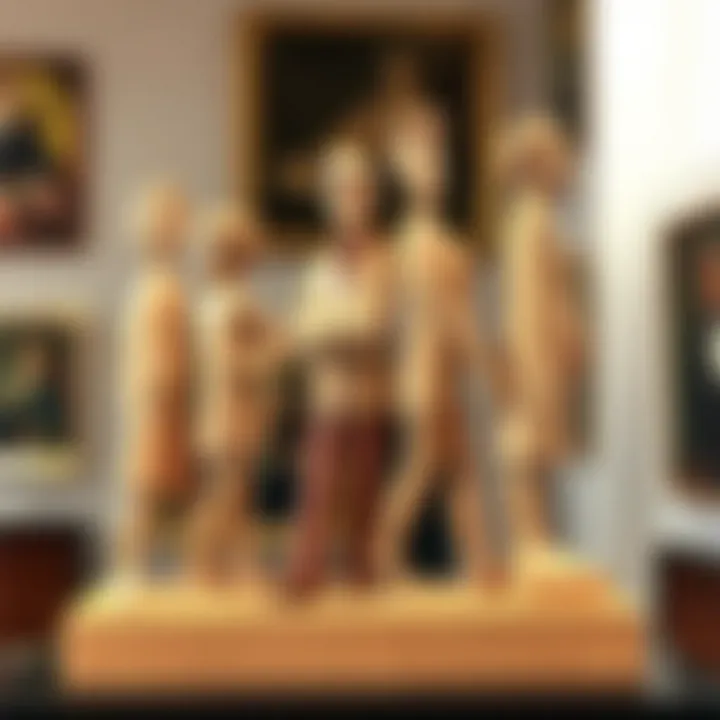
Picasso approached sculptural form with a relentless curiosity, which set him apart from his contemporaries. He did not stick to the traditional methods of modeling clay or carving stone that had dominated sculpture for centuries. Instead, he developed a unique style that embraced abstraction and fragmentation. Picasso’s influences from African art and his own cubist principles pushed him to experiment with form, resulting in pieces that often defy the rules of proportion and perspective.
For example, in The Head of a Woman (1909), the disjointed faces and angular planes reflect more than just a human figure; they embody emotional expression and psychological depth. Picasso's works invite viewers to engage not only with the physicality of the sculpture but also with a range of interpretations of reality itself.
Innovative Use of Materials
The materials Picasso selected for his sculptures were equally innovative and varied. He often used metal, wood, and found objects, treating each piece almost like a puzzle to be assembled into a new, distinct form. His use of iron and bronze, for instance, allowed for an industrial sensibility that contrasted sharply with the softer, more traditional materials.
One notable example is the Guitar (1912), where he transformed everyday materials into extraordinary art. By using pieces of cardboard and wire, he broke down the structure of the instrument, embodying the very essence of sound and rhythm. This material transformation exemplifies how Picasso used innovative methods to challenge the viewer's perceptions, making them rethink the nature of sculpture itself.
The Role of Assemblage and Mixed Media
Assemblage became a significant aspect of Picasso's sculptural practice. He regarded sculpting not only as a creation of form but also as a way of telling stories using disparate elements. His ability to combine various media showcased his belief in art being a multidimensional experience. By incorporating materials from everyday life, he blurred the lines between the artwork and the viewer's reality.
For instance, his piece Chicago Picasso is not simply a sculpture but an amalgamation of social commentary and urban identity. These hybrid works foster an intimate connection with the audience, inviting them to explore deeper meanings embedded within the materials themselves.
"Art is a lie that makes us realize the truth." – Pablo Picasso
In summary, techniques and materials in Picasso's sculpture are foundational to understanding his contribution to the art world. By employing unconventional methods and experimenting with diverse materials, he not only redefined sculpture but also influenced generations of artists who followed. His legacy thrives on the basis that creativity knows no bounds, inviting us to contemplate the artistry present in both mundane and magnificent forms.
For further reading on Picasso's artistic methods and materials, consider visiting Wikipedia on Pablo Picasso or Britannica on his life.
Themes and Symbolism
Pablo Picasso's sculptures reach beyond mere physical forms; they speak to deeper themes and powerful symbols ingrained within his layered artistic expression. The significance of these themes in his works offers an insightful lens through which to appreciate not just Picasso's own artistic journey, but also the broader cultural and political currents of his time. His sculptures prompt reflection and incite dialogue about identity, gender, politics, and personal experiences, revealing how art can serve as a transformative force.
Exploration of Identity and Gender
Picasso's exploration of identity, particularly that of gender, is complex and multifaceted. In pieces like The Weeping Woman, he delves into the emotional and psychological facets of identity, confronting traditional norms and societal roles. The portrayal of women in his work often oscillates between tender depictions and fierce portrayals, encapsulating the tension of gender dynamics that permeated early 20th-century society.
For instance, Picasso's sculptures frequently depict women in fragmented forms, which can symbolize the disjointed reality of female identity during the era. The varied representation challenges the viewer to reconsider the female experience, as it oscillates between strength and vulnerability.
“To be an artist is to take a leap into what has not yet been seen, to stumble through the shadows of forms.”
This notion of identity as fluid rather than fixed is pivotal to understanding Picasso's intention. He invites us to engage with these themes on a personal level, encouraging a dialogue about our own definitions of identity.
Political and Social Commentary
Picasso’s work during specific historical moments cannot be ignored, especially amidst the turmoil of Spain's Civil War. His sculptures often serve as a critique, reflecting societal issues and injustices in his time. The raw emotion in works like Guernica resonates through his three-dimensional pieces as well.
In particular, his Head of a Woman communicates unrest and resilience, mirroring the struggle of the Spanish populace. The abstract yet emotive forms that Picasso employs in his sculptures transform into vessels of commentary, articulating the sentiments of a society grappling with dislocation and suffering. This makes Picasso’s artistry not just a showcase of technical prowess, but also a poignant response to the turbulent realities surrounding him.
The Influence of Personal Experiences

Drawing from his own life experiences, Picasso reinterprets the personal into the artistic. His tumultuous relationships, personal struggles, and artistic ambitions heavily inform the themes within his sculptures. Each piece carries traces of his life narrative—love, loss, ambition—and transforms these experiences into universally resonant messages.
For example, the chaos enveloping his life during his Blue Period is reflected in the somber tones and melancholic forms of his sculptures, demonstrating how interpersonal relationships can shape artistic direction. This interplay between personal and artistic captures a genuine human experience, suggesting that art is an extension of one’s self.
For further exploration on Picasso’s themes in art, check out Britannica and Wikipedia, which provide comprehensive insights into his life and works.
Picasso's Legacy in Sculpture
Pablo Picasso's legacy in sculpture is a fascinating subject that unveils his profound influence on the art world, particularly in the field of modern sculpture. His innovative techniques transformed how sculptors approach form, materials, and the very essence of three-dimensional art. In exploring Picasso's contribution to sculpture, we find that it goes beyond mere aesthetic; it also challenges conventions and invites dialogue. The significance of his work rests not only in his unique artistic style but also in the way he reshaped perceptions of what sculpture could be.
Impact on Contemporary Sculpture
Picasso's influence is palpable in contemporary sculpture. Many artists today draw inspiration from his radical approach to form and abstraction. His cubist techniques opened doors to new ways of interpreting space, allowing artists to experiment fearlessly with geometry and perspective.
For instance, consider the works of contemporary artists like Anthony Caro and David Smith. These sculptors took cues from Picasso's dis Assembly of objects and his disregard for traditional representation. They utilize metals and found objects, echoing Picasso’s adventurous spirit to transcend the ordinary.
Furthermore, the fragmentation and reinterpretation of form observed in Picasso's sculptures continue to inspire new narratives and explorations in contemporary pieces. This approach fosters a deeper engagement with materials and encourages viewers to consider the relationship between the artwork and its environment.
- Integration of Mixed Media: This element has been especially significant in contemporary practices where artists blend diverse materials to create conceptually rich pieces. Picasso’s pioneering work with assemblage influenced the likes of artists such as Louise Nevelson and Robert Rauschenberg, who furthered the idea of merging sculpture and everyday objects.
- Abstract Representation: The way Picasso dismantled traditional forms opened avenues for artists to express complex ideas through abstraction, allowing a voice for cultural and personal narratives to emerge through three-dimensional works.
Influence on Future Generations of Artists
Picasso's impact does not end with his contemporaries. His influence has permeated into future generations of artists, where young sculptors continue to grapple with the intersection of identity, culture, and form. Today, artists like Kehinde Wiley and Tara Donovan showcase how Picasso's legacy is not merely about stylistic imitation but also about approaching art as a dialogue of ideas, politics, and social issues.
Additionally, Picasso's exploration of identity in sculpture is powerful for emerging artists navigating their narratives within the art scene. The idea of using sculpture as a medium to question and explore personal and societal themes resonates with many!
- Cultural Reinterpretation: Artists are increasingly examining their heritage and personal history in ways that echo Picasso's own negotiations of cultural identity throughout his career. His ability to draw from his environment while maintaining a unique artistic voice serves as a key lesson for future generations.
- Technique and Experimentation: Young artists today are exploring new technologies and materials, much like Picasso did in his time. The move towards digital sculpting and installation art reflects the foundations Picasso laid down through his relentless experimentation.
"Art is a lie that makes us realize truth" – a sentiment Picasso echoed throughout his body of work and one which continues to inspire.
The synergy between Picasso's methods and the explorations of current artists reinforces his significance in sculptural discourse. His legacy is one of innovation and challenge, encouraging each new wave of sculptors to not just create, but to question, redefine, and innovate within their own creative journeys.
The End
In wrapping up our exploration of Picasso's sculptural work, it's essential to consider the lasting influence and significance of his contributions to the art world. Picasso transformed the way we perceive three-dimensional art. His innovative techniques and bold materials invite viewers to rethink the very essence of sculpture. In this concluding section, we will reflect on his impact and the ongoing relevance of his work.
Reflections on Picasso's Contributions to Art
Reflecting on Picasso's role in shaping modern art is like peeling back the layers of an onion – complex and multilayered. His sculptures do not merely represent forms; they challenge perceptions and convey emotions. This duality makes his work particularly fascinating.
- Innovative Techniques: Picasso was never one to shy away from experimentation. He pushed boundaries in traditional sculpting techniques. For instance, his use of found objects in assemblages was revolutionary, allowing him to create pieces that were not only visually striking but also rich in narrative.
- Cultural Commentary: He masterfully embedded social and political reflections within his sculptures. The Weeping Woman, for example, transcends mere aesthetics; it captures the anguish of wartime experiences. This propensity to weave personal and collective narratives marks a significant shift in how art communicates.
- Influence on Future Artists: Picasso's adventurous spirit paved the way for countless artists. His approach to form and meaning can be traced in the works of contemporary sculptors, who continue to draw inspiration from the unconventional paths he charted.
"To draw, you must close your eyes and sing." – Pablo Picasso
In sum, examining Picasso's sculptures reveals layers of meaning that reflect his genius and influence beyond his time. Each piece serves as a testament to his pioneering spirit, urging us to engage critically with art and its capacity to convey complex human experiences. For educators, parents, and aspiring artists alike, Picasso’s work offers a wealth of learning opportunities – a reminder that creativity knows no bounds.
This journey through Picasso's sculptural realm highlights the importance of critical analysis in appreciating art. By inviting us to look deeper, we gain insights into not only his creations but our own understandings of art in our modern context. Ultimately, Picasso's legacy teaches us that art is a living dialogue, continually evolving, and profoundly relevant.